

Baal not what people think, Story of Ashtoreth

I see people confuse Baal with Bephomet and Moloch.
I see the iconography swapped ignorantly interchangeably with all three.
3 very different deities
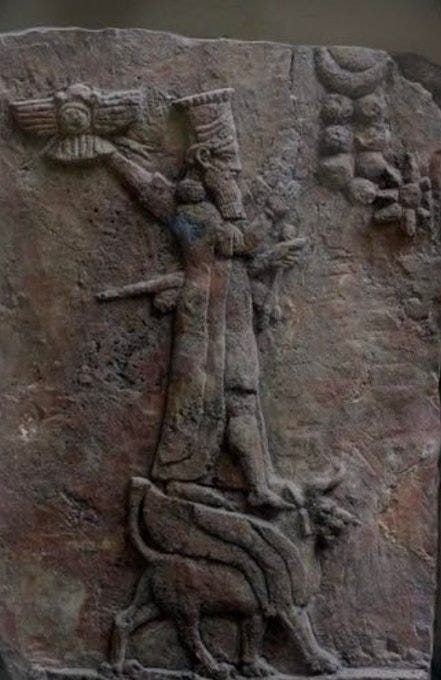
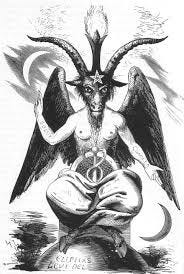
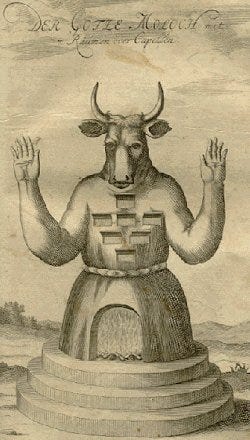
Baal isn’t a name its a title. It just means lord.
The biblical one is Baal-Hadad the storm god. I have already written his story before which will be linked here if you check again in two days it will be linked.
Because of my eye condition I am filling substack this week with hidden history, mythology, and philosophy as they do not depend on me reacting to current events.
There is also Baal Hammon Baal Shamen and Baal Zaphon etc. And from Baal Zebul to Beelzebub.
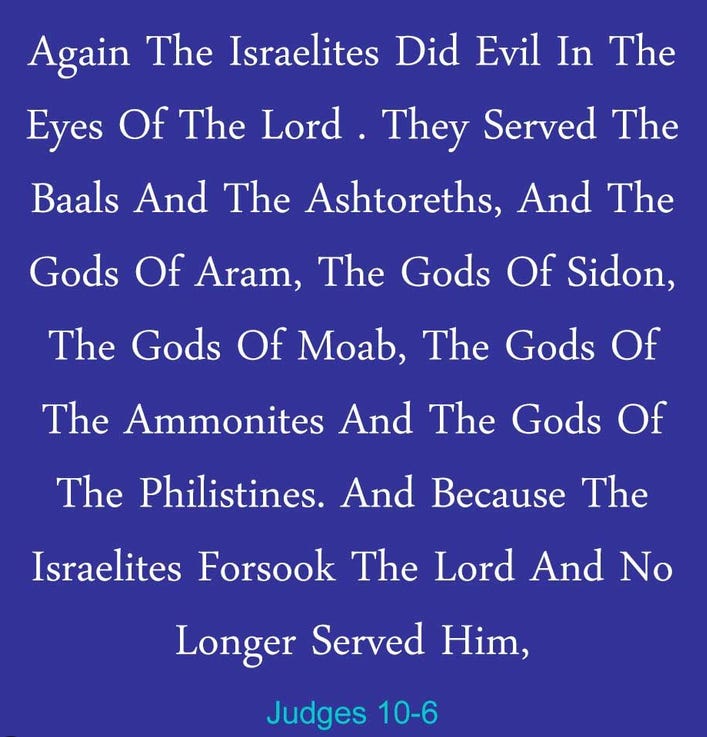
King Solomon (fictional character) built temples to Yahweh but he also built them to Moloch and to Chemosh (1 Kings 11:7, 33) and to Ashtoreth (Astarte/Ishtar).
I would like to go over these starting with Ashtoreth, Do not confuse this with Asherah the consort of the supreme god El who the Hebrews will replace with Yahweh. Her and El’s 70 gods become angels. Yahweh and Asherah were worshiped together until the period of King Josiah who converted Judaism from Polytheism to Hegemonotheism. Asherah poles are still in the Bible and some mentions of her name were replaced by the words of “groves” and “palms”. She will arise in this story however because of her connection to the tree of Life mentioned in genesis.
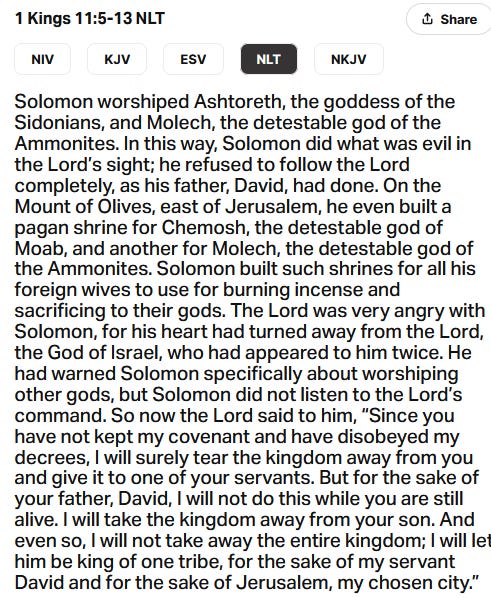
1 Kings 11:5-13
The Ashtoreth myth is from Mesopotamian goddess Ishtar who is also found in the epic of Gilgamesh where we can also find the origin for the story of Noah’s Ark and the Great Flood. A Flood created by you guessed it a rain god but not Baal. This was Enlil. The Ishtar story is based on an even older Sumerian story of the Queen of Heaven about the Goddess Inanna.
The Akkadian version of the myth The Descent of Ishtar into the Underworld, was not uncovered until 1860. It dated back to 1600 BCE. It is only 138 lines where as the Sumerian version is older 1700 BCE and is 400 lines.
It is a Epic story of a slow Under World strip show.
Leaving the goddess stripped naked.
Inanna/Inana
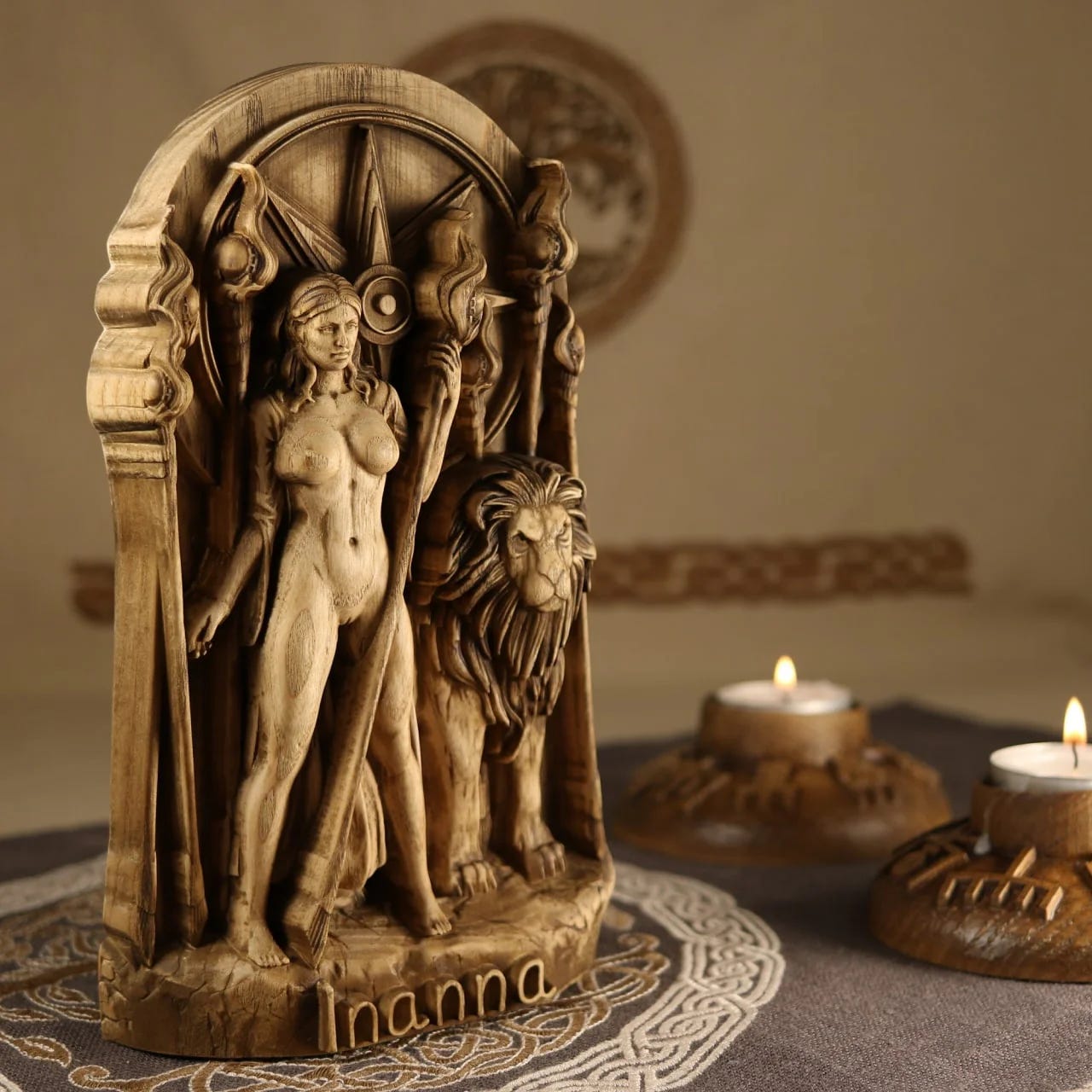
Inanna is a goddess of lust maybe more accurately “passion” as found in lust but also in war. Her ‘older sister’ the goddess of death and still-borns resides in the Under World (Land of Kur). Ereshkigalis’s throne room in the Under World in the lowest part Irkalla after the 7th gate. Sometimes she is called Irkalla, similar to how Hades is both a place and a God in the Greek version. Inanna went into the realm to preform funeral rite for Gugalanna the Bull of Heven who had died in the Epic of Gilgamesh and was the husband of Ershigalis. His death was partly Inanna’s fault as she order an him to destroy a city when he was in a weakened state.

Now if you wiki or Ai this it will get it wrong and say Ereshkigal was Inanna’s older sister. Sumerians use “sister” to mean something more like kindred or to be on the same level. And older sister is saying more powerful. In Japan modern times, they do this calling people older sister or older brother to denote higher rank even though they are not actually family related. This has lead to many mistranslated manga that looks like incest when it is not. A girl might call her boyfriend older brother, but it is no different than me saying Uncle Ted when Ted K is not actually my uncle nor is uncle Sam. It is just how some languages are.
Ereshkigal had the Hades potion as Queen of the underworld and also commanded over 5 deities associated with snakes. Ninazu, Ishtaran, Tishpak, and the Elamite god Inshushinak. Yahweh was also once associated with snakes but save that for other time.
So before going into the Underworld Inanna seeks help from her servants and other gods and she adorns 7 weapons of power. All of these are associated with lust however not swords and arrows or anything like that. Its like magic eye shadow and magic bracelets a necklace etc. oh and breasts jewels.
In Genesis you get the tale of the two Jubals one the father of shepherds (those who dwell in tents and raise livestock) and one the father of those playing string instruments and pipes. Work and play. Later the boy King David is both, he is depicted as a shepherd who plays a harp for Saul. Because Everything in that story in symbolic.
Then there is Tubal-Cain who is a metal forger, son of Zillah which makes him half brother with the two Jubals. He had sister named Naamah. Then you get this out of place passage about the father of all mentioned above, Lamech who confesses to killing a man for wounding him and he compared himself and his punishment to Cain his great great great grand father and murderer of his twin brother Abel. Seems like some missing information here and indeed there is if you know the stories those stories are based on. Interestingly Lamech says in Gen 4:24 if Cain is avenged seven times,
then Lamech seventy-seven times.
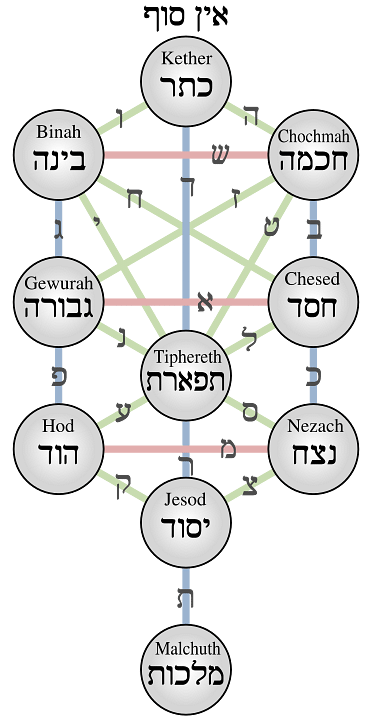
Then we get the other Lamech the father of Noah, and this Lamech died at 777 years old. These dualities and numbers are not what they seem they hold symbolic meaning based on the kabbalah.
Back to Inanna.
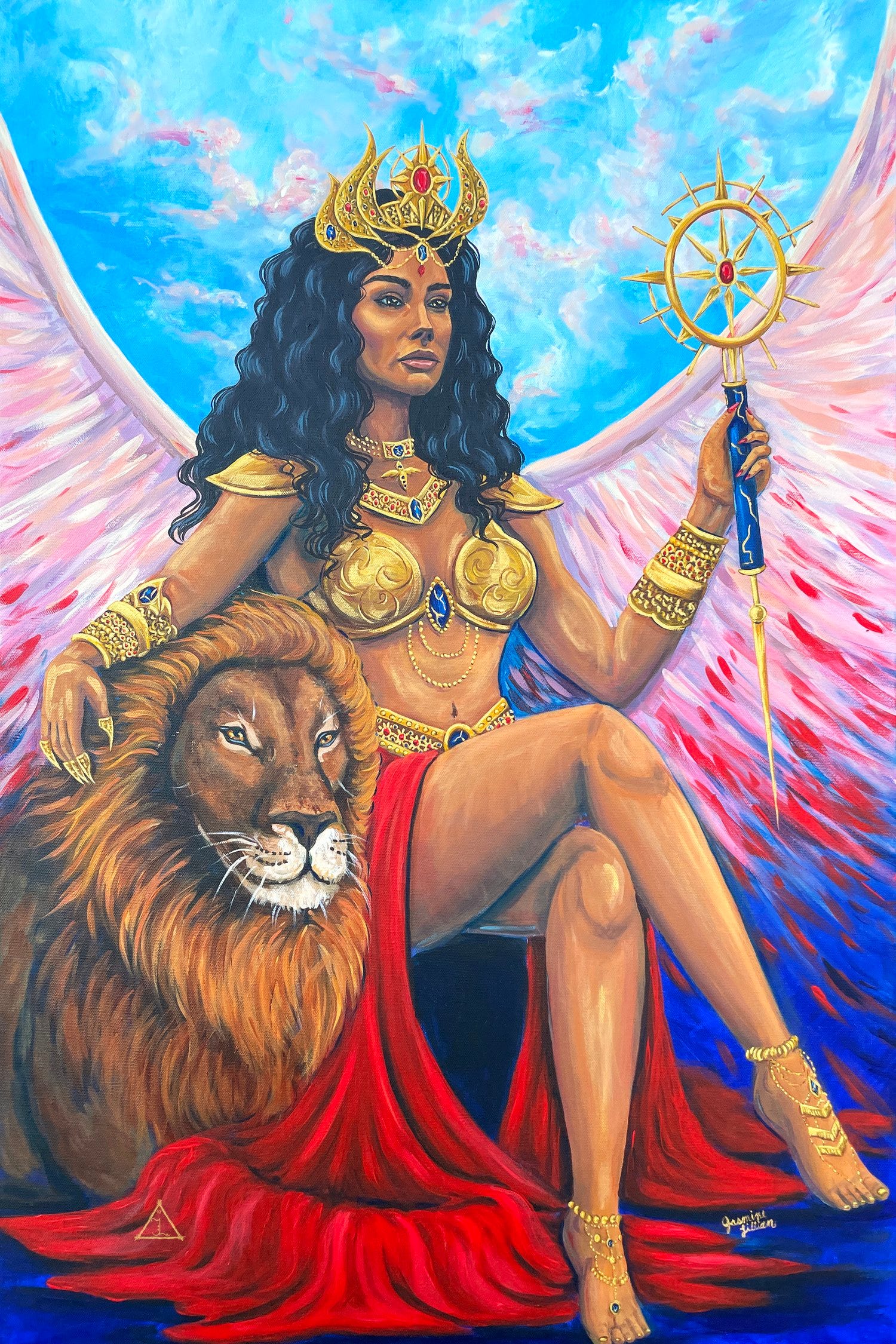
She has quite the adventure going deeper and deeper into the Underworld but at each of the 7 gates the gatekeeper demands an item from her. She has to remove one of her garments. She sacrifices one of her powerful items at each gate in order to pass through to reach the throne room. After the last gate she is completely naked.
First she loses her crown and wig both signs of authority. Then her jewels and necklace and ornamented breasts signs of wealth. Then her breast plate and her ring and bracelets. No metal, no protective power. Her measuring rod, and lastly her eye make up and robe both enhancements to beauty making her fully nude and natural.
To understand this the story is removing
Gate 1 Her crown and wig
Gate 2: Her pearl necklace
Gate 3: Her egg shaped beads on her breast
Gate 4: The rest of her breast plate
Gate 5 Her sparkling gold ring and bracelets
Gate 6: Her lapis lazuli measuring rod and line (divine power)
Gate 7: Her royal pala robe and makeup
Ultimately without her powerful items she is not enough on her own and Ereshkigal has her judged and killed.
However Inanna knew all of this was going to happen. She had planned it all out. In lines 65-67 she says:

And she knew the Annunaki would judge her. Maybe you are thinking hey Annunaki aren’t those the Nephilim Giant half angle offspring of female humans and angels in the Bible? Well
Sub to continue.
Yes and no. Like Baal the Annunaki narrative has been hijacked in modern times by internet stupidity and recent historical-fiction writing, particularly of Zecharia Sitchin. It has practically nothing to do with the ancient texts.
The Annunaki are the 7 judges. This story will evolved over time with 7 in the underworld 7 above and 7 on Earth and the live on a mountain in Lebanon. But im not going to complicate things.
They judge Inanna to death and hang her corpse on a hook in the throne room.
ARISE
Nincubura a messenger goddess who Inanna had spoken with before she was killed, had been instructed to seek help if Inanna did not return after three days and three nights.
So Nincubura goes to Enlil (the one who made the flood) but he does not help her. So then she goes to Nanna (the moon god) but he does not help her either. Anyway this goes on until she gets to Enki who is also Inanna’s father. (which means greater than her but also her father).
Enki decided to help but knows it will not be easy. He creates to flying creatures and gives them instructions on what to do. They are equipped with the Life-giving plant and the Life-giving water.
He tells them how to slip through the gates (still affected by the items) and what to say to Ereshkigalis. There is a fragment missing here but basically they are to sympathize with Ereshkigalis and flatter her into a deal. Enki correctly predict that they would be offered a bunch of great gifts and that they should refuse them all. They would ask for the corpse of their queen and then give her the life-giving plant and water.
This was done and Inanna arose. But before the leaving the Annuaki stopped her. None who entnered can leave the underworld without a replacement.
So small and big demons held on to her and escorted her out of the Underworld. They came upon Nincubura who was waiting at the entrance mourning. She has lacerated her own eye, nose, ears and in private her buttocks and worn the poorest clothing in mourning.
Inanna refuses to allow her to be the replacement. So they keep going towards the City. And the demons keep making suggestions for replacements but they are always of those desperately loyal to Inanna and she begs them no.
Finally they reach her husband Dumuzid, and he is dressed in fine clothing sitting on the throne not mourning her death at all. The demons decided to take him. Despite this Inanna feels for her husband. But he makes a prayer turining his limbs into snakes and slips away escaping the demons temporarily.
I fly betrays him, telling Inanna his whereabouts for some reward.
They catch him in a tavern. A compromise is made. 6 months of the year he will go in the Underwrold and 6 months his sister Geshtinanna will replace him, and they will cycle back and forth.
But why what did she do?
Well she was like Morpheus. As goddess of dreams, she interpreted her borther’s omnius visions he was having before Inanna arose from the Underworld and she tried to hide him. The fly betrayed them both.
Thus by dying Inanna completed the ultimate funeral rites for the Bull of Heaven Gugalanna. And although stripped naked and powerless she also escaped death and the Underworld because of the loyalty of many others.
The life giving plant/fruit and life giving water Enki used goes back to Asherah. When Yahweh speaks in Genesis using the words “us” he speaking of himself and Asherah. When he says let us make man and woman in “our” image/likeness he is also talking about himself and Asherah.
That is another story.
Which would you like next? Asherah? More on Inanna? For example the Ishtar version. Chemosh, the Baals, Moloch, Bephomet, Enlil and & Enki, the Annunaki?
You se when you understand the ancient textual origins of these being they are not so scary and none of these had anything to do with Satan or Lucifer. In fact not even Lucifer has anything to do with the Devil. Waaaaay later Nicaea Christians would rebrand Inanna/Ishtar/Ashtoreth with Astaroth a demon further made confusing by H.P. Lovecraft’s Azathoth a chaotic diety known as the blind idiot god. Funny because Yahweh is called by Jesus the blind and lost one.
If you want to skip all the stories and hear the conclusion. Judaism worships a demon. They inverted everything good value and made rape conquest genocide and enslavement all positive things. it is no wonder we get the Israel we have today.
HEAL UP FAST RYAN!
THE SIGHT OF THOSE
WHO SEE THE MOST
IS DEAR TO US ALL.
Would love to know more about Jesus calling Yahweh blind and lost one.
Good stuff as always. Wishing you the best.